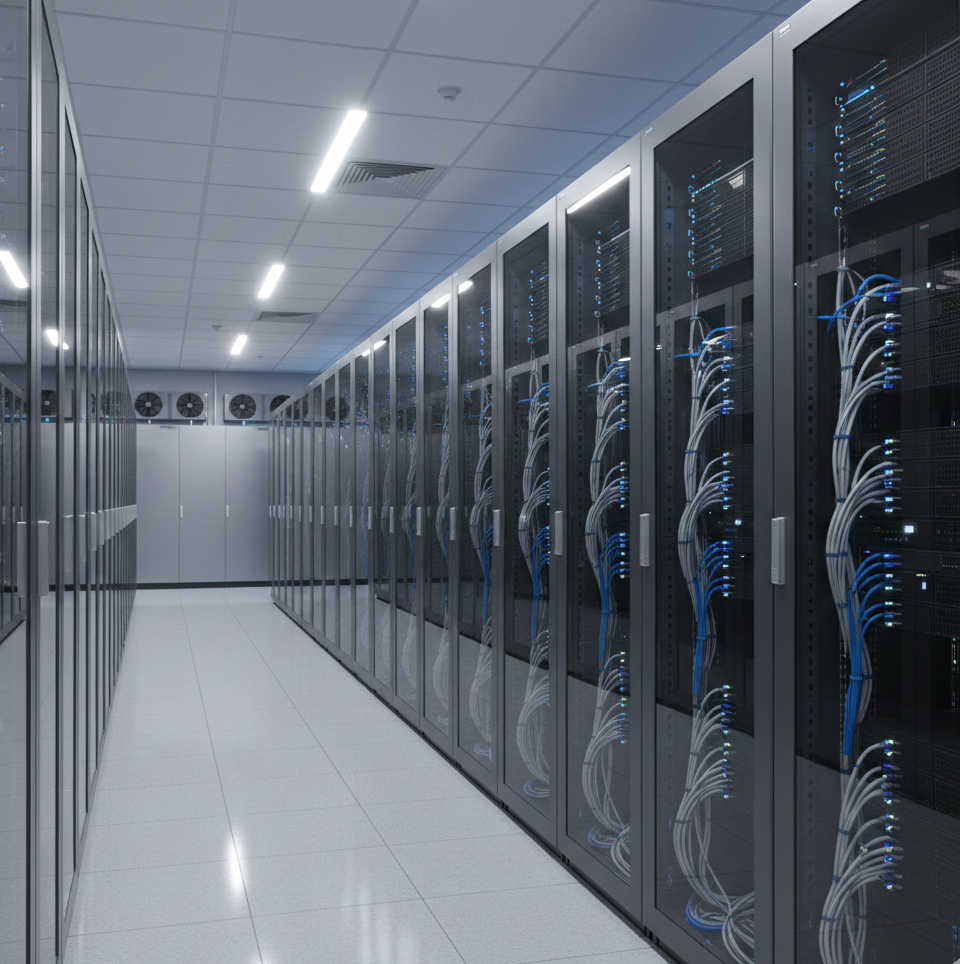
Server Setup Services in Mumbai, India for Reliable Business IT Operations
A server often works quietly in the background, but a large part of a business may depend on it. Shared files, databases, ERP systems, user accounts, internal applications, backups, and remote access can all be affected if the server is poorly planned or configured.
Professional server setup services in Mumbai, India help businesses build an IT environment that fits the way they actually work. The process goes beyond installing hardware. It involves selecting the right server architecture, setting up storage and networking, securing access, planning backups, and preparing the system for future growth.
With reliable server installation services, businesses can deploy physical or virtual servers correctly from the start. Careful server configuration then ensures those systems perform as expected, while scalable server infrastructure solutions provide the foundation needed to support new users, applications, and data over time.
Why Proper Server Setup Matters
There is no single server setup that works for every organisation.
A five-person business using shared files has very different requirements from a company running databases, ERP software, multiple departments, and remote users. Choosing a server without understanding these requirements can lead to unnecessary expense or poor performance later.
Businesses commonly use server setup services in Mumbai, India for :
- File and storage servers
- Application servers
- Database servers
- Domain controllers
- Backup servers
- Web servers
- ERP and CRM platforms
- Virtualisation environments
- Remote access systems
Professional server installation services help connect the server correctly with the organisation’s network, storage, security, and backup environment. Once the system is installed, appropriate server configuration is essential for performance, permissions, reliability, and security.
Good server infrastructure solutions bring these different elements together instead of treating the
server as an isolated piece of hardware.
Start With the Business Requirement
Before purchasing or configuring a server, it makes sense to understand what the system actually needs to handle.
A server assessment may look at the number of employees using the system, the applications they rely on, storage requirements, network capacity, expected data growth, remote access, backup needs, and security policies.
For example, a business expecting rapid data growth may need more storage flexibility from the beginning. Another company running a critical database may place greater importance on performance and redundancy.
Professional server setup services in Mumbai, India use this information to recommend an appropriate setup rather than simply installing the highest-specification hardware available.
This planning also makes future server configuration simpler and helps businesses build server infrastructure solutions that can grow without requiring a complete redesign.
Physical Server Installation Services
Physical servers remain a practical choice for organisations that need dedicated processing power, on-premises applications, local databases, or greater control over their systems.
Depending on the environment, server installation services may include rack mounting, hardware installation, RAID setup, storage configuration, network connectivity, operating system installation, firmware updates, UPS integration, and hardware testing.
Installation details matter. Poor cooling, inadequate power protection, incorrect storage design, or weak network planning can create problems even when the server hardware itself is powerful.
Professional server setup services in Mumbai, India therefore consider the wider IT environment as part of the installation process.
Server Configuration Based on Its Role
Once the server is running, it still needs to be configured for its intended job.
Typical server configuration work may include :
- Operating system setup
- User and group accounts
- Folder and access permissions
- Active Directory
- DNS and DHCP
- Firewall policies
- Shared storage
- Remote access
- Application services
- Backup scheduling
- Monitoring tools
- Security policies
The settings required for a file server will not be identical to those needed for a database or application server.
A file server, for instance, needs carefully organised permissions so employees can access the information required for their role without seeing restricted data. A database server may require more attention to storage performance, resource allocation, and administrative privileges.
This is why reliable server setup services in Mumbai, India should be based on workload rather than a standard configuration template.
Windows and Linux Server Environments
Both Windows and Linux can play important roles within modern server infrastructure solutions.
Windows Server is often used for Active Directory, Group Policy, file sharing, user authentication, Remote Desktop Services, Hyper-V, DNS, and DHCP.
Windows server installation services can include setting up these roles and integrating them with existing users, devices, and network resources.
Linux servers are commonly used for websites, databases, application hosting, development environments, and other specialised workloads.
Linux server configuration may cover SSH access, firewall settings, user permissions, web services, databases, operating system updates, logging, monitoring, and security hardening.
The right platform should depend on the business application and technical requirement rather than
preference alone.
Virtualisation and Virtual Servers
Businesses do not always need a separate physical server for every application.
Virtualisation allows several virtual machines to operate on one physical host. A company might run a domain controller, application server, test environment, and database as separate virtual machines while using the same underlying hardware.
Professional server setup services in Mumbai, India can help plan resource allocation for CPU, memory, storage, and networking.
Virtualisation can make server infrastructure solutions more flexible, but it still needs careful planning. If one virtual machine consumes too many resources, other systems on the same host may suffer.
Correct server configuration helps maintain a balance between performance and available resources.
Storage and RAID Planning
Storage is one area where choosing purely by capacity can be misleading.
A business may have enough disk space but still experience poor application performance because the storage design does not suit the workload.
During server installation services, storage planning should consider current data volume, future growth, database activity, application performance, redundancy, backup, and recovery requirements.
RAID configurations may also be selected according to the required balance between performance and fault tolerance.
Effective server infrastructure solutions should therefore treat storage as part of the overall architecture rather than simply adding more disks when space becomes limited.
Server Security Should Begin at Deployment
Security is easier to manage when it is built into the initial setup.
Secure server configuration may include strong administrator credentials, restricted remote access, firewall rules, multi-factor authentication where appropriate, role-based permissions, operating system updates, anti-malware protection, logging, and removal of unnecessary services.
Professional server installation services should also include reviewing default accounts, open ports, outdated firmware, and unnecessary software before the system enters production.
The server itself is only one part of security. Effective server setup services in Mumbai, India should work alongside endpoint protection, network security, user access management, and backups.
Pasted markdown
Backup and Disaster Recovery
Even a well-maintained server can fail.
Hardware faults, ransomware, power problems, accidental deletion, software corruption, and human error can all make business data unavailable.
For this reason, backup should be included within server infrastructure solutions from the beginning.
Businesses may use local, cloud, network, image-based, database, virtual machine, or offsite backups depending on their requirements.
Good server configuration should also include automated schedules, retention policies, backup monitoring, and restore testing. A backup should not simply exist; the organisation should know that the data can actually be recovered when required.
Monitoring Server Performance
Once a server is in production, it needs ongoing visibility.
Monitoring can help IT teams keep track of CPU utilisation, memory usage, disk capacity, storage health, network activity, backup status, service availability, logs, and security alerts.
After server installation services are completed, this monitoring can reveal developing problems before they cause a major outage.
Periodic server configuration reviews are also useful because a server that was correctly sized two years ago may no longer suit the organisation’s current workload.
Scalable Server Infrastructure Solutions
Businesses change, and their IT environment changes with them.
More employees may join. Storage requirements may increase. New applications may be introduced, or the organisation may open another location.
Scalable server infrastructure solutions should therefore allow room for additional storage, memory, users, applications, virtual machines, backup capacity, and network demand.
Professional server setup services in Mumbai, India should consider these possibilities during initial planning so businesses are not forced to replace their entire environment whenever requirements increase.
Choosing a Server Setup Provider
When comparing providers of server setup services in Mumbai, India, businesses should look beyond installation alone.
A capable provider should understand hardware, operating systems, networking, storage, virtualisation, backup, security, and troubleshooting.
Before recommending server infrastructure solutions, the provider should understand how the business uses its systems, which applications are critical, how much data is involved, and what level of downtime is acceptable.
The scope of server installation services should also be clear, including installation, testing, security, networking, and post-deployment support.
Frequently Asked Questions
1. What are server setup services?
Server setup services cover planning, hardware or virtual server deployment, operating system installation, networking, security, storage, backup, and server configuration.
2. Why use professional server setup services in Mumbai, India?
Professional server setup services in Mumbai, India help businesses deploy servers according to their applications, users, performance requirements, security needs, and expected growth.
3. What do server installation services include?
Server installation services may include hardware setup, RAID configuration, operating system installation, networking, firmware updates, testing, storage setup, and security checks.
4. What does server configuration mean?
Server configuration involves setting up users, permissions, networking, operating system services, applications, storage, security controls, backups, and monitoring.
5. What are server infrastructure solutions?
Server infrastructure solutions combine servers, networking, storage, operating systems, virtualisation, security, backup, and monitoring into an environment that supports business applications.
6. Can both Windows and Linux servers be installed?
Yes. Server installation services can cover Windows or Linux platforms depending on the applications, workloads, and technical requirements.
7. Does every small business need a physical server?
No. The right approach depends on users, applications, storage, security, and performance requirements. Physical, virtual, and cloud-based options can all be appropriate.
8. How long does a server setup take?
The timeframe varies according to hardware, applications, data migration, networking, storage, security requirements, and the complexity of the server configuration.
9. Can existing server infrastructure solutions be upgraded?
Yes. Server infrastructure solutions can often be expanded through additional memory, storage, virtualisation, backup improvements, security hardening, or operating system upgrades.
10. What should I check before choosing a server provider?
Look for experience with hardware, operating systems, networking, storage, virtualisation, backup, security, and troubleshooting. A provider offering server setup services in Mumbai, India should understand your requirements before recommending a solution.